
Mahjong Dimensions




Free daily card games
A new deal every day, solved before it goes live, so it can always be won.




Mahjong Dimensions
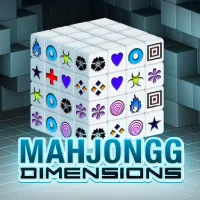
Mahjong Dimensions is the game the rest of the series is built from: mahjong solitaire moved off a flat table and onto a cube you can turn.
The change is bigger than it sounds. On a flat layout you can see the whole problem, and the difficulty is working out the right order. On a cube, roughly half the tiles are facing away from you at any moment, so before you can plan an order you have to build a picture of a board you cannot see all at once.
That is a memory exercise as much as a puzzle, and it is why people who are fast at ordinary mahjong often find their first cube humbling.
How to play Mahjong Dimensions
- Tiles are stacked into a three dimensional block.
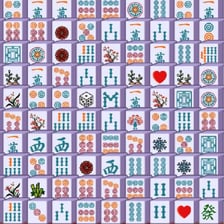
- Match two tiles showing the same face to remove them.
- A tile can be taken only when nothing sits on top of it and one of its sides is open.
- Drag to rotate the cube and reach the faces behind.
- Clear every tile to finish.
Building a picture
The skill that separates players is not matching speed, it is holding the far side of the cube in mind while working on the near side.
The way to build that is a deliberate first rotation: turn the cube fully once before taking a single tile, noting roughly what is where. Two seconds of looking saves far more than two seconds of hunting later.
What free means
The rule is the same as flat mahjong: nothing on top, one side clear. What is harder on a cube is judging it, because the perspective can make a tile look exposed when it is boxed in.
When in doubt, the test is whether you could slide the tile straight out to the left or the right without disturbing anything.
Tips and strategy
Order of clearing
- Take from the top layers first. A tile removed from the top frees several beneath. An edge tile frees almost nothing.
- When three matching tiles are visible across different faces, decide which two to take. The third has to stay reachable, and on a cube reachable is easy to lose track of.
- Clear a face before turning. Rotating between every match is the most common way to waste a board.
Reading the cube
- Rotate a quarter turn at a time. Full spins disorient more than they reveal.
- Watch the corners of the cube. Corner tiles have two open sides and are almost always available, which makes them the safest starting points.
- The bottom layer is where boards lock. Work towards it rather than saving it.
Where it falls apart
- Diving in without an orienting rotation.
- Judging availability by what looks exposed rather than by the slide test.
- Chasing a match you glimpsed on another face instead of clearing what is in front of you.
The timed versions are Mahjong Dimensions: 470 seconds, 640 seconds and 900 seconds, and the flat layouts are on the mahjong page.
More games like this



Play our free daily puzzles
See all →Made by us. One a day, the same for everyone, no sign up.




Last updated
Frequently asked questions
What makes Mahjong Dimensions different from ordinary mahjong?
The tiles are stacked into a cube you rotate rather than laid out flat, so part of the board is always hidden and finding matches means turning it.
When can a tile be removed?
When nothing rests on top of it and at least one side is open. If you could slide it straight out sideways, it is free.
Is there a time limit?
This is the base version of the series. The timed variants run at 470, 640 and 900 seconds.
Why is a cube harder than a flat layout?
Because you cannot see the whole board at once, so you have to hold the far side in mind while working on the near side.
Is it free?
Yes. Nothing to download, no account and no payment.