
Hidden Object Games
Look at a busy scene and find what the list asks for. These are the gentlest puzzles here, with no clock in most of them and no way to fail.
 Day Of the Cats
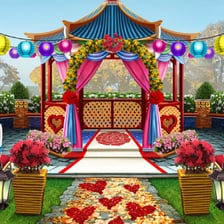

 Emma's Lost Toys


 Tiny Pirates: Treasure Island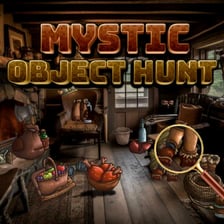




Which kind of hidden object game is this?
The name covers several different things, and they ask for different amounts of your evening.
- A scene and a list is the classic form: one cluttered picture, a named set of things to find in it. What Is Grandma Hiding and Mystic Object Hunt are the straight version.
- Story games string scenes together with a case to solve between them. Rachel Holmes, Hidden Cats: Detective Agency and Apothecarium - Renaissance of Evil work this way, and they take the longest.
- Some ask for one thing over and over in new pictures. Spot The Cat is exactly that and nothing more.
- Hybrids mix searching with another kind of puzzle. Hidden Objects: Brain Teaser and Detective Loupe Puzzle both do this.
Hidden objects or spot the difference?
They get shelved together and they are not the same puzzle. A hidden object scene gives you one picture and a list of things to find in it, so you are searching against a checklist. Spot the difference gives you two nearly identical pictures and no list at all, so you are comparing rather than searching, and you do not know how close you are until you find something. The first rewards patience. The second rewards a systematic eye.
How to actually find things
- Search by shape, not by name. Your eye finds an outline much faster than it finds the idea of a teapot.
- Work the picture in bands, left to right, top to bottom. Random scanning covers the same corner four times and misses another entirely.
- Expect objects to be the wrong size and the wrong way up. Half of the difficulty in these scenes is scale, not concealment.
- Objects hide on the boundary between two areas, where an outline can be mistaken for something else.
- Hints recharge on a timer in most of these. If you are stuck, the hint costs you nothing but the wait.
Frequently asked questions
Is there a time limit?
In most of them, no. A few add an optional clock, and the story games sometimes put a timer on a single scene rather than the whole case. Nothing here punishes you for taking an hour.
What happens if I click randomly?
Most of these subtract time or lock the cursor briefly after several wrong clicks in a row. It is a mild penalty and it exists to stop the obvious strategy of clicking everything.
Are these good for children?
The scene and list games are, and they are genuinely useful vocabulary practice for a young reader. The detective stories are written for adults, not because of the content but because the puzzles between the scenes assume a longer attention span.
Do they work on a phone?
They work, with a caveat. These scenes are drawn dense and detailed, and a small object on a small screen means a lot of pinching and zooming. A tablet is the sweet spot for this category.
What is the difference between this and a puzzle game?
Searching rather than solving. There is nothing to work out here, only something to see, which is why these are the right thing to reach for when you do not want to think hard. If you want the other kind, the puzzle category is next door.