Sudoku Games
No arithmetic, despite the digits. Sudoku is a logic puzzle that uses numbers because they are easy to tell apart, and every square can be reasoned out from what is already on the grid.

How do you solve one without guessing?
A properly made sudoku never needs a guess. There is always a next square that can be worked out, and finding it is the whole game.
- Scan each digit from one to nine in turn, and look for a box where it has only one square left.
- Then work by square instead of by digit: find the cell with the fewest possibilities and see whether it is down to one.
- Pencil in candidates only when scanning stops producing answers. Doing it from the first move slows you down more than it helps.
- If two cells in a row can hold only the same two digits, no other cell in that row can hold either of them. That single idea unlocks most of the harder grids.
- If you find yourself guessing, go back. A guess that works still leaves you unsure, and a guess that fails costs the whole grid.
What actually makes a sudoku hard?
Not the number of digits it starts with. That is the common assumption and it is close to useless as a guide: a grid with thirty given digits can be gentler than one with thirty four. What sets the difficulty is which techniques the grid forces you to use. An easy puzzle can be finished by scanning alone. A hard one has a point where scanning stops working and you have to reason about pairs, about a digit confined to one line inside a box, about what a cell cannot be rather than what it can.
Which sudoku is which here?
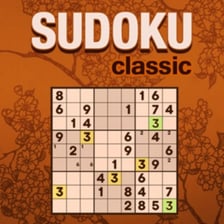
- Sudoku and Sudoku Classic are the plain nine by nine grid with difficulty settings.
- The Daily Sudoku is one new grid every day, the same one for everybody playing on that date.
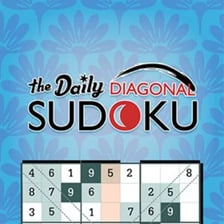
- The Daily Diagonal Sudoku adds the two long diagonals as extra regions, so eleven groups have to hold one to nine instead of nine. Fewer possibilities survive each deduction, and that makes it easier than it sounds.
- MathDoku is the arithmetic cousin: the grid is divided into cages with a target and an operator, and the digits inside have to reach it.
- Sudoku Blocks borrows the grid and is not sudoku at all. It is a block placing game, and worth knowing before you open it expecting a puzzle to solve.
Frequently asked questions
Do I need to be good at maths?
No, and this is the most common reason people avoid sudoku. Nothing is added, subtracted or counted. The digits could be nine colours or nine animals and the puzzle would be identical. MathDoku is the one exception on this shelf, and it says so in the name.
Can a sudoku have more than one solution?
A properly made one has exactly one, and that is what makes solving by pure logic possible. If a grid has two solutions, some square somewhere can only be settled by choosing, which is a flaw rather than a difficulty setting.
Is there a new puzzle every day?
Yes, in two flavours. The Daily Sudoku brings a fresh standard grid each morning and The Daily Diagonal Sudoku brings a variant one. Everybody gets the same puzzle on the same date.
What is diagonal sudoku?
Standard sudoku asks that every row, every column and every three by three box holds one to nine. Diagonal sudoku asks the same of the two corner to corner diagonals as well. More constraints means more deductions available, so many people find it no harder than the standard grid.
Should I use the pencil marks?
On easy and medium grids they mostly get in the way. On hard ones they are the difference between solving and staring, because the useful patterns are patterns among candidates rather than among answers.