
Cards Games
Solitaire, mostly, and the versions of it worth playing. One deck, a few rules, and a problem that is different every time you deal.
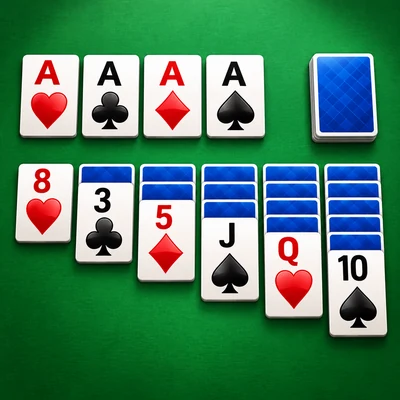 Daily
Daily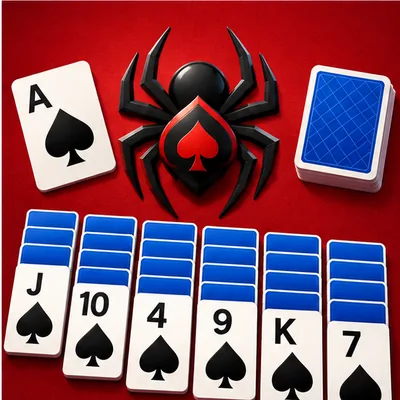 Daily
Daily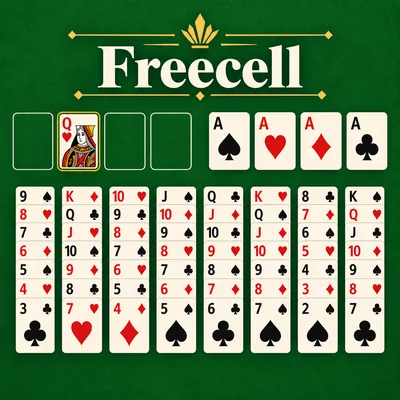




 Arkadium's Classic Solitaire New
  Arkadium's Spider Solitaire New
  Word Deck Solitaire
 Which solitaire is which?
The name covers a family that shares a deck and very little else, and knowing which one you are playing changes how much a loss should bother you.
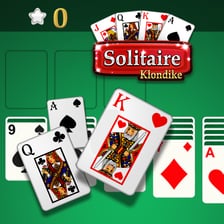
- Klondike is what almost everyone means: seven piles, four foundations, cards turned from a stock when the table runs out of moves.
- FreeCell deals every card face up. Nothing is hidden, nearly every deal is winnable, and a loss is usually a mistake rather than bad luck.
- Spider builds runs in suit rather than in alternating colours and uses two decks, which makes it the longest game of the family.
- TriPeaks and Crescent are faster, closer to a card puzzle than to a patience, and they suit a short sitting.
How to play Klondike well
- Play from the longest pile first. That is where most of the face-down cards are buried, and freeing them is what decides the deal.
- Do not send every card to the foundations the moment it fits. A five you have banked cannot catch a four you turn over two moves later.
- Know which King is going into a column before you empty it. An empty column with no King is a hole rather than an opportunity.
- When two moves both work, take the one that turns a face-down card over.
- Turn the stock only when the table genuinely offers nothing. Cycling early wastes information you have not used yet.
Does skill actually matter?
More than the reputation suggests, and not equally across the family.
FreeCell is nearly all skill. With every card visible from the deal, the information needed to win is on the table, and the overwhelming majority of deals can be won by correct play. Losing one means you missed something.
Klondike is part luck. The order of the stock is fixed before you touch anything, and a share of deals cannot be cleared however well they are played. That is not a flaw and it is not you.
Where to start
- Klondike Solitaire for the classic game, with a hint button for stuck deals.
- FreeCell Solitaire if you would rather the game rewarded thinking than dealing.
- Daily Solitaire for one fresh deal a day rather than an endless supply.
- Crescent Solitaire for a two deck variant that plays quite differently.
- Addiction Solitaire if you want something that looks simple and is not.
Where the rules came from
Patience games were being written down in northern Europe by the late eighteenth century and reached the English speaking world in the nineteenth, as a solitary pastime rather than a computer one. Klondike takes its name from the gold rush.
What made it universal was Microsoft, which shipped it with Windows from 1990 and taught a generation to use a mouse by dragging cards. The rules here are the ones it has always had.
Frequently asked questions
What can I move into an empty column in Klondike?
Only a King, alone or with the ordered run already sitting beneath it. No other card can start a new column, which is why emptying one with no King in sight is usually a mistake.
Can every game of solitaire be won?
It depends which one. Nearly every FreeCell deal is winnable with correct play. A share of Klondike deals cannot be cleared however well they are played.
Is there a version without a score or a timer?
Yes. Most of these will play with scoring turned off, and none of them require it. Nothing here is keeping a record unless you want one.
What is the difference between draw one and draw three?
How many cards come off the stock at a time. Draw three is the traditional rule and considerably harder, because two of every three cards are only reachable in a particular order.
Do these work on a phone?
They do, and card games survive a small screen better than most. Dragging a card is a gesture a finger was made for.