
Mahjong Games
Mahjong solitaire takes the tiles of the four player game and gives them to one person, with a layout to dismantle instead of an opponent to beat. It is the quietest thing on this site.

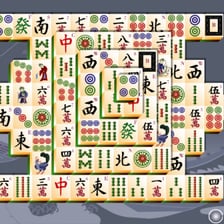





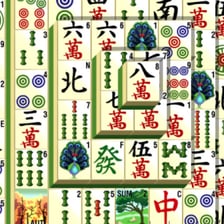



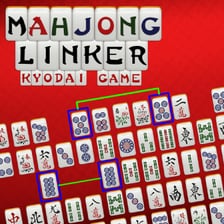








 Arkadium's Mahjongg Alchemy New
  Arkadium's Mahjong New
  Arkadium's Mahjongg Candy Cane
 The one rule that decides every board
A tile can be taken only when it is free, and free means two things at the same time: nothing rests on top of it, and at least one of its long sides, left or right, has nothing beside it.
A tile hemmed in on both sides cannot be taken however clearly you can see it. That single rule is behind almost every board people lose, and behind almost every moment of "but those two are identical".
How to avoid sealing yourself in
Most boards are lost in the first minute, by clearing the easy pairs around the outside and leaving the middle locked.
- Take tiles off the top of the stacks first. They are the ones blocking everything underneath.
- When three or four of the same picture are showing, work out which pair leaves the other two reachable before you touch either.
- Clear long horizontal rows early. They only open from the ends, and left alone they become a wall.
- Given two legal matches, take the one that uncovers a hidden tile rather than the one that tidies an edge.
- Use the hint. On these boards it costs nothing and it exists to keep a game moving, not to score you.
Which layout should you play?
- The classic turtle is the 144 tile pile most people picture, and it is the one to learn the rule on. Mahjong Solitaire is that board.
- Three dimensional versions stack the tiles into a cube you rotate, which changes the geometry completely. Mahjong Dimensions is the one to try.
- Connect games ask you to link identical tiles along a clear path rather than to free them, which is a different puzzle wearing the same tiles. Butterfly Kyodai is the best known.
- Timed variants put a countdown on the same layouts, for anyone who finds the standard version too calm.
Where to start
- Mahjong Solitaire for the classic board and unlimited hints.
- Mahjong Dimensions if you want the cube rather than the pile.
- Mahjong Classic for a straightforward layout with no timer.
- Kris Mahjong for a large collection of layouts in one game.
- Butterfly Kyodai if connecting appeals more than freeing.
Is this the same as real mahjong?
No, and the difference is worth knowing. The four player game is a game of draws and discards, closer to rummy than to solitaire, played in China since the nineteenth century and still played seriously across Asia. It involves betting, scoring hands, and three other people.
The single player tile matching game shares the tiles and almost nothing else. It was designed for computers in the early 1980s and reached most people through them. Calling it mahjong is a convention rather than a claim, and nobody who plays the real game confuses the two.
Frequently asked questions
Why will two identical tiles not match?
Because at least one of them is blocked. A tile needs a clear left or right side and nothing stacked above it, so remove whatever is pinning it and the pair becomes legal.
Can every layout be finished?
Not always. Some deals leave the last pairs buried under one another, which is why shuffle and hint controls exist. A board that will not come out is not necessarily a board you played badly.
What do the flower and season tiles do?
They are the only tiles that do not need an exact twin: any flower pairs with any other flower, and any season with any other season. In most versions they are worth more than an ordinary pair.
Do hints cost anything?
On these boards, no. The hint shows a legal move, there is no limit on how often you ask, and your score is not reduced for it.
Is there a version without a timer?
Yes, and it is the default in most of them. The timed layouts are marked as such, and the countdown is a choice rather than the standard.