Arkadium's Jigsaw


Free daily card games
A new deal every day, solved before it goes live, so it can always be won.


Arkadium's Jigsaw
A jigsaw on a table is limited by the table. You get the puzzle you bought, at the piece count it came in, and you lose one under the sofa.
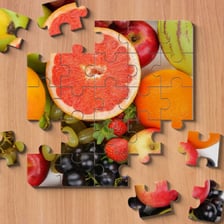
A jigsaw on a screen has none of those constraints, and Arkadium's version spends that freedom on three things: a new picture every day, three piece counts to choose from, and a set of small tools that quietly remove the parts of the hobby nobody actually enjoys.
The rest of it is unchanged, which is the point. It is still a picture cut into pieces, still solved edges first, still the same twenty minutes of hunting for one specific shade of sky.
How to play Arkadium's Jigsaw
Choose a difficulty before the puzzle starts. Easy, normal and expert differ only in how many pieces the picture is cut into, and the jump between them is steeper than it looks, because every extra piece is also an extra piece to search through for every placement.
- Drag a piece and drop it near where it belongs.
- A correct placement snaps into position and stays there.
- Wrong placements simply do not stick, so nothing is ever lost.
- Finish the picture to complete the day's puzzle.
The three tools
The eye in the top right corner shows you the finished picture. On a table this is the box lid, and it is the single most useful thing on screen. Use it before you start rather than when you are stuck.
The zoom slider magnifies the board. This matters more than it sounds, because the difference between two pieces of sky is often a few pixels of gradient that are invisible at normal size.
Clicking the table next to the eye cycles through arrangements of the loose pieces. It is the digital equivalent of tipping the box out and spreading everything face up, and doing it deliberately is faster than scrolling through a jumbled pile.
Scoring
There is a clock, and finishing faster scores higher. It runs quietly rather than shouting at you, which suits the game. If you are playing to relax, ignore it entirely.
Tips and strategy
The edge, always
Find every piece with a flat side and build the frame first. It is the only part of a jigsaw with a rule you can apply mechanically, it bounds the whole problem, and it gives you two fixed dimensions to work inside.
This is not a preference. It is the reason people who finish jigsaws quickly finish them quickly.
Sort before you place
The slow method is to pick up a piece and hunt for its home. The fast method is to sort everything first and barely hunt at all.
- Group by dominant colour, roughly, without being precious about it.
- Within a group, split pieces that are all one shade from pieces containing an edge between two shades. The second kind are worth far more, because an edge is a line you can follow.
- Set aside anything with an unusual shape or a distinctive fragment of the picture. Those go in early and become anchors for everything near them.
Work from contrast outward
Start where the picture gives you information: a horizon, a face, the join between two objects, a line of text. Those areas assemble almost by themselves and each completed patch shortens the search for its neighbours.
Leave the large flat regions until last. Sky, water, snow and shadow are the hardest part of any jigsaw and there is no trick that makes them easy.
When you reach the flat areas
Stop matching by colour. It has stopped carrying information, and you will burn ten minutes comparing shades that are genuinely identical.
Match by shape instead. Count the tabs and the blanks on each side of the gap you are filling, then look only for pieces with the complementary silhouette. It feels mechanical and it is several times faster than staring.
Pace
Take breaks. Jigsaw solving runs entirely on pattern recognition, which degrades quickly with fatigue, and five minutes away from the screen routinely finds a piece you looked directly at four times.
Piece count is the honest difficulty dial. If a puzzle is frustrating rather than absorbing, drop a level. If it finishes before you have settled into it, go up one.
Choosing the difficulty
Piece count is the only real dial in this game, and it is worth being honest with yourself about it.
Easy is a coffee break. Normal is the version most people want without knowing it. Expert is an evening, and the jump into it is steeper than the numbers suggest, because search time grows faster than the piece count does.
A daily puzzle works best when it fits the time you actually have. Dropping a level on a busy day is not a retreat, it is the difference between finishing and abandoning.
More of the same
The Daily Jigsaw is the other daily on the site, and the jigsaw collection has the rest. If you like the sorting and searching more than the picture, puzzle has games built on the same instinct.
More games like this

Play our free daily puzzles
See all →Made by us. One a day, the same for everyone, no sign up.
Last updated
Frequently asked questions
Is there a new jigsaw every day?
Yes. A fresh picture arrives each day, which is the whole idea of the format.
Can I choose how many pieces?
Yes, through the easy, normal and expert settings. The piece count changes the difficulty far more than the image does.
What does the eye button do?
It shows the finished picture, the equivalent of the box lid. Looking at it before you start is worth more than checking it when you are already stuck.
How do I deal with large areas of sky or water?
Stop matching by colour and match by shape. Count the tabs and blanks around the gap and look only for the complementary silhouette.
Does the timer matter?
Finishing faster gives a higher score, but nothing forces you to hurry. The game works perfectly well as something to do slowly.
Is Arkadium Jigsaw free?
Yes, free in the browser with nothing to install and no account.