
Wordoku

Wordoku
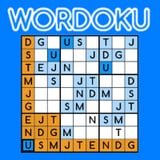
Wordoku is sudoku with the numbers taken out and letters put in their place. Nine different letters, each appearing once in every row, once in every column, and once in every three by three box.
The logic is identical to the number version. What changes is your brain. Digits carry an order you can lean on without noticing, since you know one comes before two, and a missing seven announces itself. Letters do not do that, so scanning a row for the one that is absent is genuinely slower until you adjust.
Most people find the first few grids harder than the equivalent sudoku, then find that the difficulty disappears entirely once the letter set becomes familiar.
How to play Wordoku
You get a nine by nine grid with some cells already filled and a bank of letters underneath.
- Click an empty cell, then click the letter you want to place there.
- Each row must contain all nine letters, with none repeated.
- Each column must contain all nine letters, with none repeated.
- Each three by three box must contain all nine letters, with none repeated.
- The grid is solved when every cell is filled and no rule is broken.
Choosing a difficulty
The difficulty settings change how many cells are filled at the start and, more importantly, which techniques the grid demands.
The easiest setting can be finished by looking at one row or box at a time. The hardest requires you to work with what a cell cannot be rather than what it is, which is a different mental activity entirely.
Why letters instead of numbers
Nothing about the puzzle changes. The letters are simply nine symbols, and the puzzle would work with nine colours or nine shapes.
The value is that letters block the pattern recognition you built up from years of number grids, which is why an experienced sudoku player often finds the same difficulty setting noticeably harder here.
Tips and strategy
Start with the crowded lines
Look for the row, column or box that already has the most letters in it. Fewer blanks means fewer possibilities, and a line with seven letters filled often gives you two placements immediately.
Working outward from the crowded areas is faster than working left to right, and it is the single biggest difference between people who solve grids quickly and people who stare at them.
Hunt one letter across the whole grid
Rather than asking what goes in this cell, ask where can this particular letter go.
Take one letter and check every box that does not have it yet. Often the rows and columns that already contain it rule out all but one cell in a box, and that placement then rules out cells elsewhere. Chaining one letter through the whole grid is faster than working cell by cell, because each placement immediately constrains the next box.
Write down what a cell cannot be
On the harder settings there will be no cell with only one candidate for long stretches. That is not a sign you have gone wrong.
Progress there comes from elimination. Pick a cell, mentally list the letters it cannot hold because of its row, column and box, and see what remains. Two candidates in a cell is information even though it is not an answer, because a nearby cell may share exactly those two, which locks both out of the rest of the line.
Never guess on a hard grid
A guess that turns out wrong does not fail immediately. It fails eight placements later, in a part of the grid you have stopped watching, and by then you cannot tell which entry poisoned it.
If you are truly stuck, go back to hunting a single letter across all nine boxes. There is always a next step in a well formed grid, and the reason it is invisible is usually that you have been looking at one region for too long.
The letters that trap people
Letters that look similar at a glance cause more errors than any logical difficulty. A row that appears complete but is missing a letter you thought you saw will send you into an unsolvable position, and the mistake happened several minutes earlier.
When something stops adding up, check the completed lines before questioning your logic. Nine times out of ten the fault is a duplicate you read past.
Building speed
Speed comes from scanning, not from thinking faster. Look along a whole row, then a whole column, then a whole box, in that order, without stopping to solve anything.
The placements that are already available announce themselves during that sweep. Most of the time people lose is spent deciding where to look next.
Other grids here
Sudoku Classic is the traditional numbers version, Sudoku Village wraps the same rules in a progression, and Anagram Crossword is the letters equivalent from the other direction. There is more in sudoku and puzzle.
More games like this
Play our free daily puzzles See all →
Made by us. One a day, the same for everyone, no sign up.
Developer
Wordoku is made in house, and this is its home. It is not licensed from anyone else.
Last updated
Frequently asked questions
What is Wordoku?
Sudoku played with nine letters instead of the digits one to nine. Every row, column and three by three box must contain each letter exactly once.
Do the letters spell anything?
No. They are simply nine symbols standing in for nine numbers, so no word knowledge is required and the puzzle is pure logic.
Why is it harder than normal sudoku?
Digits carry a natural order that helps you spot the missing one. Letters do not, so scanning a line takes longer until the letter set becomes familiar.
How many difficulty levels are there?
Several, from a beginner setting that can be solved by looking at one box at a time up to grids that require working from what a cell cannot be.
What should I do when I get stuck?
Pick a single letter and check every box that is missing it. That is almost always faster than staring at one cell, and a well formed grid always has a next step.
Is Wordoku free to play?
Yes, free in the browser with no download and no account.