
Microsoft Ultimate Word Games

Microsoft Ultimate Word Games
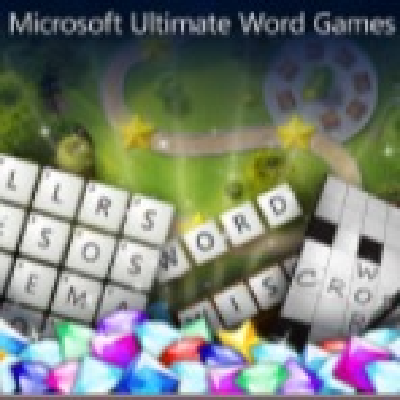
Three word games in one collection, and the three are properly different from each other rather than variations on a theme.
Crosswords is the clued grid everyone knows. Wordament is a letter board where you trace words through adjacent tiles and length is what scores. Word Twister gives you a set of letters to rearrange.
Each has several modes, which is the part that gives the collection its shelf life. A single word game gets exhausted. Three formats, each with variations, exercise different skills: the crossword rewards knowledge, the board rewards pattern recognition, the anagram rewards holding letters in working memory.
How to play
- Choose one of the three games from the collection menu.
- In Crosswords, click a square, read the clue and type the answer.
- In Wordament, drag through letters that touch each other, including diagonally.
- In Word Twister, rearrange the letters you are given into valid words.
- Each game offers several modes.
How to play Microsoft Ultimate Word Games
Wordament
Adjacency is the rule: every letter must touch the one before it. Longer words score disproportionately more, so a seven letter word beats two threes made from the same tiles.
The habit that separates good players is scanning clusters rather than hunting for words. Take four letters that sit together and read them in every order before moving on.
Crosswords
Standard rules and standard method. First pass for certainties, then let the crossings do the work.
Word Twister
Shuffle constantly. Nearly every missed anagram is missed because the eye locked onto one arrangement and would not release it.
Tips and strategy
Habits that work in all three
- Take the short answers first. They are cheap and they open everything else.
- Run the endings: S, ED, ER, ING. This works in the crossword, on the board and in the anagram.
- Reset your view rather than staring. Shuffle, rescan, or move to another clue.
Wordament specifically
- Scan the corners first. Corner tiles have the fewest neighbours and are the most likely to be left unused.
- Diagonals hide the long words, because most players scan only across and down.
- Find the path before the word. The path is the constraint, not your vocabulary.
What goes wrong
- Playing only your strongest of the three. The crossover between them is real and the weaker two improve the stronger one.
- In Wordament, hunting for a word you have decided on rather than reading what is available.
- Treating the anagram mode as a speed exercise. It rewards patience.
The standalone version is Microsoft Word Twister, and the rest are on the word games page.
More games like this
Play our free daily puzzles See all →
Made by us. One a day, the same for everyone, no sign up.
Last updated
Frequently asked questions
Which games are in the collection?
Three: Crosswords, Wordament and Word Twister, each with several modes.
What is Wordament?
A letter board where you connect adjacent tiles, diagonals included, to form words. Longer words score disproportionately more.
Do the three games train different things?
Yes. The crossword rewards knowledge, Wordament rewards pattern recognition, and Word Twister rewards holding letters in working memory.
Is it free?
Yes. It runs in the browser with nothing to install and no account.
How is it different from Microsoft Word Twister?
It is the larger collection with more modes for each of the three games.